Line is the wire that brings power in from your breaker panel. Load is the wire that sends that power out to a light, outlet, or appliance. Think of line as the supply and load as the delivery. On a GFCI, dimmer, or smart switch, a mix-up can stop the device from working or leave a circuit live when you think it is off.
If you want to know what is line and load in electrical wiring, this guide gives the short answer first. Then it shows how to spot each wire safely, what goes wrong when they swap, and when to call a licensed electrician.
What Do Line and Load Mean in Electrical Wiring?
Line and load describe which way power moves through a device. The line side is the incoming side. It connects back to the breaker panel and stays hot whenever the breaker is on. The load side is the outgoing side. It sends power on to a light, a motor, or the next outlet.
So, what is line and load in electrical systems? It comes down to one rule. Power enters on the line and leaves on the load. Devices like GFCI outlets and dimmers label both sides, because they only work right when wired the correct way.
Picture a hallway light. Power runs from the panel to the switch. That feed is the line. The wire running from the switch to the light is the load. The switch sits between them and decides if power passes.
Line Wire vs. Load Wire
The line wire vs load wire difference is easy once you see it side by side.
| Line wire | Load wire | |
| Direction | Brings power in | Sends power out |
| Connects to | Breaker panel or a prior box | Light, outlet, or next device |
| Power status | Hot when the breaker is on | Hot only when the device passes power |
| Device label | LINE | LOAD |
People also ask what is line and load wire in simple terms. The line wire is the supply. The load wire is what the device feeds. Wire color will not tell you which is which. Black, red, and white wires can fill either role, so always read the labels and test.
What Do LINE and LOAD Mean on a GFCI Outlet?
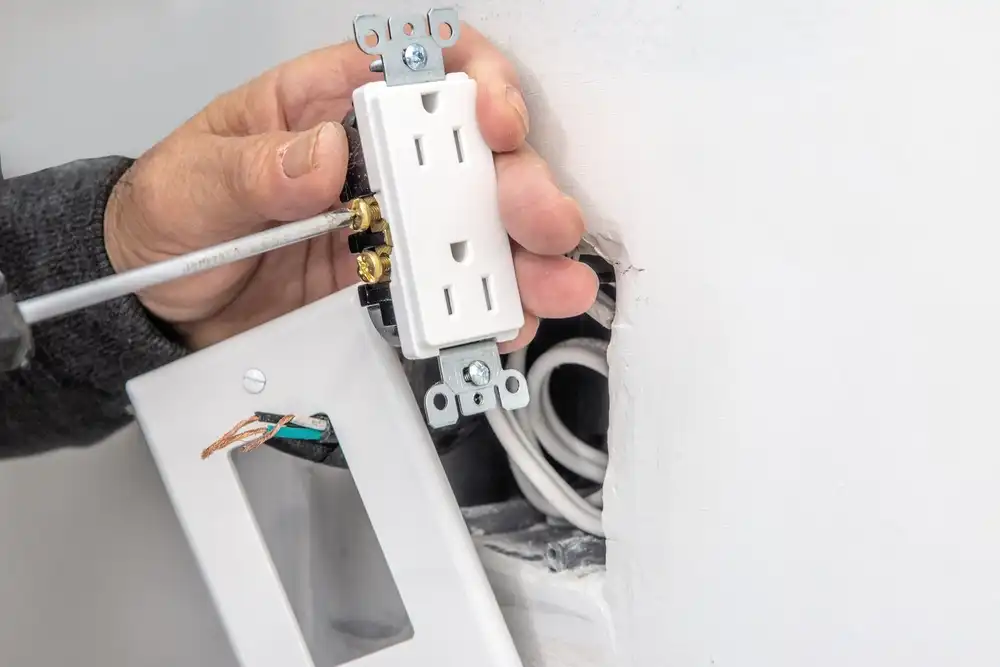
A GFCI outlet has two pairs of screws, marked LINE and LOAD. The LINE screws take power from the panel. The LOAD screws feed power to other outlets down the circuit. GFCI stands for ground fault circuit interrupter. It cuts power fast if current leaks, which helps prevent shock.
This is the part of what is line and load in electrical wiring that matters most for safety. Wire the supply to LINE, and the GFCI protects itself and every outlet on its LOAD side. Skip the LOAD screws, and it protects only its own outlet. New GFCIs ship with tape over the LOAD screws to remind you to hook up the supply first.
The National Electrical Code requires GFCI protection in places like bathrooms, kitchens, garages, and outdoor spots. Local rules can add more.
Line vs. Load vs. Neutral vs. Ground
Line vs load electrical wiring is about direction. Neutral and ground are about jobs.
| Term | Job | Common color |
| Line | Brings power in | Black or red |
| Load | Sends power out | Black or red (varies) |
| Neutral | Returns current to the panel | White |
| Ground | Safety path during a fault | Bare copper or green |
Line and load both carry hot power. Neutral carries current back to the panel. Ground does nothing until a fault happens. Then it gives current a safe path. Colors can differ in older homes, so never trust color alone. A broken neutral can also become live. Treat every wire as hot until you test it.
Line and Load on a Switch
Line and load on a switch work the same way, but basic switches rarely label them. A single-pole switch has two screws. One gets power in, and the other sends it to the light. On this type, the order does not matter, because the switch only opens or closes the path.
Dimmers and smart switches are different. Most label LINE and LOAD, and a reversed hookup can stop them from working or damage them. Many smart switches also need a neutral wire.
A 3-way switch adds a common terminal, usually a dark screw. On one switch, the common wire is the line. On the other hand, it is the load. The two lighter screws are travelers.
How to Identify Line and Load Wires Safely
Electric shock can cause serious injury. Follow these steps, and stop if anything feels unclear.
- Turn off the breaker. Label the panel so nobody flips it back on.
- Confirm power is off with a non-contact voltage tester. Check every wire in the box.
- Take a photo of the wiring before you disconnect anything.
- Read the device. GFCIs, dimmers, and smart switches print LINE and LOAD near the screws.
- Separate the wires so no bare ends touch each other or the metal box.
- If you know how to use a multimeter, turn the breaker on and test each wire against the ground or neutral. The wire that is hot with the device disconnected is the line.
- Turn the breaker off again and confirm it is dead. Then mark the line wire with tape.
If you cannot tell which wire is which, stop and call a licensed electrician. A guess can cost far more than a service call.
What Happens If Line and Load Are Reversed?
The result depends on the device. Knowing what is line and load in electrical wiring helps you spot the cause fast.
- GFCI outlet: Newer models include reverse wiring protection and will not reset. Older ones may work but fail to protect downstream outlets. The LOAD screws can also stay live when the GFCI is tripped, which risks shock later.
- Dimmer or smart switch: It may not turn on, may flicker, or may fail early.
- Basic single-pole switch: Usually nothing happens, since the order does not matter.
If a GFCI will not reset, reversed wiring is a common cause. Turn off the breaker and check the labels again.
Common Line and Load Wiring Mistakes
- Trusting wire color. Old repairs and odd setups break the usual color rules.
- Skipping the test. A voltage tester takes seconds and removes guesswork.
- Putting the downstream cable on LINE. Those outlets lose GFCI protection.
- Removing the LOAD tape when nothing connects to it. The tape belongs there until you wire a load.
- Using loose screws or push-in holes. Weak connections cause heat and flickering.
- Ignoring a missing neutral. Many dimmers and smart switches need one, and old boxes often lack it.
- Not labeling wires. This causes mix-ups at the next repair.
When Should You Call an Electrician?
Call a pro if you see any of these:
- Burn marks, a hot outlet, or a burning smell.
- A GFCI that keeps tripping or will not reset after you check the wiring.
- Aluminum or cloth-covered wiring, common in older homes.
- Several cables you cannot sort out.
- Any work inside the panel.
Some cities, including New York City, require a licensed electrician for this work. A pro also pulls permits and checks that the repair meets code. For more safety guidance, see the National Fire Protection Association (https://www.nfpa.org) and the U.S. Consumer Product Safety Commission (https://www.cpsc.gov).
Conclusion
Now you know what is line and load in electrical wiring. Line brings power in. Load sends it out. Read the labels, test before you touch, and never trust wire color alone. Basic switches forgive a mix-up, but GFCIs and dimmers do not.
If the wiring feels unclear, let a pro handle it. Nooks Electrical offers licensed Electrical Services across Queens, NY, from outlet and GFCI repair to panel work. Book a visit, and we will find the fault and explain the fix.
Frequently Asked Questions
What is line and load in electrical wiring in one sentence?
Line is the incoming power from your breaker panel, and load is the outgoing power that feeds a device or the next outlet down the circuit. GFCIs, dimmers, and smart switches label both sides, so the difference matters most on those devices.
Does line and load matter on a regular light switch?
Not on a basic single-pole switch, because it only opens or closes the path and either screw works. It does matter on dimmers, smart switches, 3-way setups, and GFCIs, where a reversed hookup can stop them from working.
Which wire is line and which is load?
The wire that is hot with the device disconnected is the line. Turn the breaker off, separate the wires, and test with a voltage tester before you touch anything. If the results are unclear, call a licensed electrician.
Can I connect a GFCI to the LOAD screws only?
No. Power must come in on the LINE screws, or the GFCI will not work right and may not reset. The LOAD screws are only for outlets further down the circuit that you want protected.
Why will my GFCI not reset?
Common causes are reversed line and load wires, a real ground fault, moisture in the box, or a worn-out unit. Turn off the breaker, check the LINE and LOAD labels, and look for damp or damaged wires. If it still trips, have a pro inspect the circuit.
Can wire color tell me line from load?
No. Black, red, and even white wires can serve as line or load, and old repairs often break the usual color rules. Read the device labels and test each wire instead.
Is the line or the load wire hot?
The line wire is hot whenever the breaker is on. The load wire is hot only when the device passes power through, such as when a switch is on or a GFCI is reset. Treat both as live until you test them.
Can I replace a GFCI outlet myself?
Some places allow it, but many cities, including New York City, require a licensed electrician for electrical work. Wrong wiring on a GFCI can remove shock protection, so a pro is the safer choice.